Unraveling a Financial Enigma
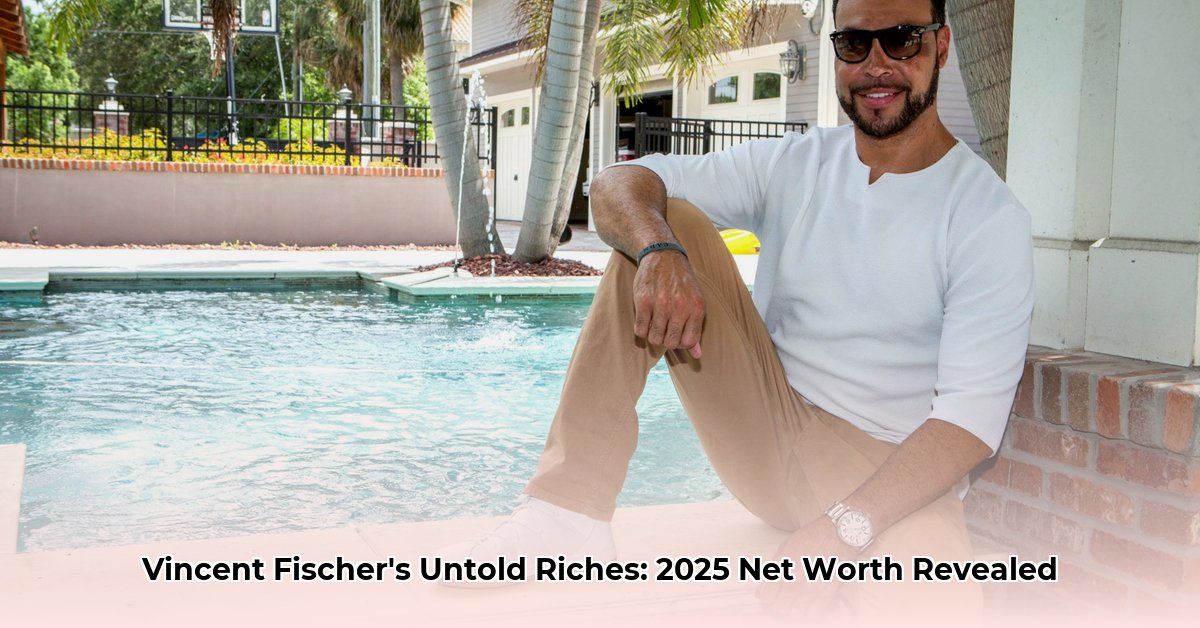
Vincent Fischer's 2025 net worth remains a captivating mystery. While his remarkable financial success is undeniable, pinning down a precise figure proves elusive due to the private nature of his investments and business ventures. This article aims to illuminate the path to his wealth, providing insights into his strategies and the factors contributing to his success, while acknowledging the inherent limitations of estimating his net worth with complete accuracy. We’ll explore his shrewd investment tactics, entrepreneurial spirit, and the calculated risks that have shaped his financial empire.
A Multifaceted Fortune: Building Blocks of Success
Fischer's wealth isn't the product of a single stroke of luck; rather, it's a testament to a well-diversified investment strategy and keen entrepreneurial acumen. He has reportedly invested across various asset classes, including real estate, publicly traded stocks, promising startups, and even the volatile cryptocurrency market. This broad approach showcases financial sophistication and risk mitigation. However, without access to his private financial records, quantifying the contribution of each investment remains impossible – much like assessing the value of a complex painting without knowing the individual value of the brushstrokes.
But how much is he really worth? The lack of transparency makes precise quantification challenging. Industry analysis provides a range of educated estimates – placing his net worth in the multi-millions, with some speculating it may even reach into the billions by 2025. Crucially, these figures remain estimations, not confirmed facts. The opaque nature of his holdings, many of which are not publicly traded, significantly complicates the process of precise valuation. This is particularly true considering the ever-changing nature of the markets and the diverse strategies involved.
Entrepreneurial Prowess: Fueling the Financial Engine
Further complicating the assessment of Fischer's net worth are his diverse entrepreneurial endeavors. While his involvement in numerous businesses is public knowledge, the specifics of their financial performance remain confidential. This lack of transparency makes it difficult to accurately assess the overall contribution of these ventures to his personal wealth. It's like trying to value a company without access to its financial statements. We know it’s successful, but the precise extent of that success is unknown.
Risk and Reward: A High-Stakes Strategy
Fischer's investment approach seemingly embraces calculated risk. His diversification strategy aims to mitigate potential losses, but it doesn't eliminate them entirely. Market volatility, regulatory changes, unforeseen circumstances, and even reputational damage could significantly impact his overall wealth. This underscores his willingness to balance high reward with substantial risks, showcasing a bold and ambitious approach to wealth creation.
Risk Assessment Matrix: Navigating Uncertainties
| Risk Category | Probability | Impact | Mitigation Strategies |
|---|---|---|---|
| Market Swings | High | High | Diversification, hedging, flexible investment approach |
| Regulatory Changes | Medium | Medium | Staying informed, adapting business models |
| Reputational Damage | Medium | High | Ethical conduct, transparency |
| Information Privacy | High | Medium | Maintaining confidentiality, careful information sharing |
| Long-Term Planning | Low | Medium | Succession planning |
Key Takeaways from Fischer's Success
Despite the lack of precise figures, Fischer's financial journey offers invaluable lessons:
- Diversification: Spreading investments across asset classes reduces risk.
- Entrepreneurial Spirit: Building businesses generates significant wealth.
- Risk Management: Understanding and mitigating potential problems is crucial.
- Privacy: Protecting financial information is essential.
While the exact net worth of Vincent Fischer remains largely a mystery, his story highlights the importance of strategic investment, calculated risk-taking, and a keen entrepreneurial spirit. The resulting wealth isn't just about accumulating money; it's a testament to smart planning, dedication, and a deep understanding of markets and risk. Further investigation into Fischer’s activities and more transparency regarding his financial holdings could potentially allow for more substantiated assessments in the future. However, the inherently private nature of extreme wealth will likely always make this a formidable challenge.
How to Diversify Investments: A Multifaceted Strategy
Key Takeaways:
- Diversification is personalized. It must align with individual risk tolerance and goals.
- Successful diversification involves spreading investments across and within asset classes.
- Regular portfolio rebalancing is crucial for maintaining target allocations.
- Understanding and mitigating behavioral biases is key to consistent investment results.
- Professional financial advice provides valuable insights and personalized guidance.
Vincent Fischer's success offers a powerful illustration of successful investment diversification. Though exact portfolio details remain private, we can extrapolate a plausible approach by analyzing his public activities and combining them with sound investment principles.
Principles of Effective Diversification
Effective diversification is about spreading risk across different investment vehicles. This isn’t simply buying diverse stocks; it’s a nuanced strategy. It's about building a resilient portfolio, not relying on a single, potentially precarious, asset class.
First, distribute assets across diverse asset classes: stocks, bonds, real estate, perhaps even alternative investments. This approach mitigates the impact of underperformance in any single area.
Second, apply intra-asset class diversification. Within stocks, for instance, include a mix of large-cap, mid-cap, and small-cap companies across various sectors. This further reduces concentration risk.
Third, align your diversification strategy with your risk tolerance and investment time horizon. Younger investors with a longer time horizon can often accept higher risk for potentially greater returns.
A Sample Diversification Strategy
This is an illustrative example, and not a reflection of Fischer's actual portfolio:
| Asset Class | Allocation (Example) | Risk Level | Time Horizon |
|---|---|---|---|
| Large-Cap Stocks | 30% | Moderate | Long-term |
| Small-Cap Stocks | 15% | High | Long-term |
| Bonds (Government) | 20% | Low | Medium-term |
| Real Estate | 15% | Moderate-High | Long-term |
| Cash/Alternatives | 20% | Low | Short-term |
Remember, this is a sample allocation. Your ideal mix depends on your individual circumstances and risk profile.
The Significance of Rebalancing
Over time, market fluctuations will inevitably shift your portfolio's allocation. Regular rebalancing – perhaps annually or semi-annually – restores your portfolio to its target mix, ensuring it remains aligned with your risk tolerance.
Mitigating Behavioral Biases
Even with a well-diversified portfolio, emotional biases like fear and greed can lead to impulsive decisions. Recognizing and mitigating these biases is crucial for long-term success. Sticking to a disciplined plan despite market fluctuations is essential for achieving financial goals.
Vincent Fischer Net Worth
Content about vincent fischer net worth (Auto-generated fallback due to API error).